Friday, January 15, 2021

Skill Improvement for ADHD Brains with a TL;DR List

 Earlier today, I wrote a comment in response to a post on reddit about how to improve when you have ADHD. As someone who has ADHD and is pretty okay at a number of skills, I thought I would put that comment here too, since that's what a blog is for.

 Enjoy!

*****

I have ADHD-PI, and here is a bunch of actionable advice I've used with myself for improving at skills. Since we all have ADHD here and are likely to type much more than we're willing to read, here's a tl;dr:

TL;DR BULLET POINT LIST

  • Cultivate relaxed, sincere interest
  • Don't over-read
  • Don't over-train
  • Don't keep playing when in a bad headspace
  • Get exercise

I'm not amazing at the game, but I do have other competitive things I'm good at. Generally I try to cultivate a "relaxed, sincere interest" in things I want to get better at. If I try to force my brain to focus on the game, then I end up beating myself up about not doing things correctly. That teaches my brain that playing the game causes suffering, thus making it harder to focus. If I relax and let my brain think about the things I love about the game, that means my brain is more likely to stay engaged.

Honestly, having too much knowledge about the game that you're not ready to apply can be a hindrance to improvement. If you have too many things you're trying to do, you won't improve at any of them. Maybe try to focus on improving one thing at a time, and try reading about the game less. I've also often found that a lot of what people say online is either not applicable to my play-style, or I'm not ready to hear it yet. If I don't have the skill to pull off something that someone says online, the solution isn't to try harder. The solution is to ignore it until it seems more natural to me. I have often found that advice has made no sense to me, but after playing and improving for a few months, it will suddenly make sense and be the easiest thing in the world to execute.

(As an example - I used to not understand why people loved Ridley's nair so much. I would try to use it, but then it would get stuffed by disjoints. So I stopped trying to use it for a while. Eventually my spacing and match-up understanding improved enough that using nair seemed natural. So I, too, started to love the nair.)

The brain is an associative learning device - that is to say, if you are spending a lot of time playing sub-optimally, the brain will learn to continue playing sub-optimally. If you notice yourself on autopilot, go do something else so your brain doesn't train itself harder to play on autopilot.

Brains require actual physical chemicals in order to improve at skills, and they only produce those chemicals at a certain rate. If you try to improve at a skill when your brain doesn't have any more of the chemicals needed for learning, you won't be able to improve. So don't overdo it, and if you're already tired then don't play very much.

Exercise also improves the rate at which the brain produces these brain chemicals, so doing some sort of exercise can help. Half an hour of cardio per day has been shown to improve the ability of ADHD brains to focus. As well, strength training increases the rate at which the brain produces dopamine, which is one of the brain chemicals needed to learn. Especially if you're starting out, you don't have to do much - just a nice walk is good. 

*****

Again, I hope that y'all had a good time reading this thing. I hope that at the very least the bullet-point list helps some of you.

Have a good day!

Wednesday, October 28, 2020

Smash Bros, rather than Fencing, and Hard Reads

 It has been a long time since I made a blog post! Let's make one today.

Since the pandemic started, I have been doing basically zero fencing. A little bit of stray fencing work here and there, but no consistent practice and nothing really useful for improving my fencing. But what I have been doing is playing Smash Bros Ultimate.

Smash Bros is a series of fighting games unlike any other. It is highly air-focused and mobile, and has mechanisms in place to put penalties on too much defense and too much offense both. There are a ridiculous number of characters. I play one named Ridley.

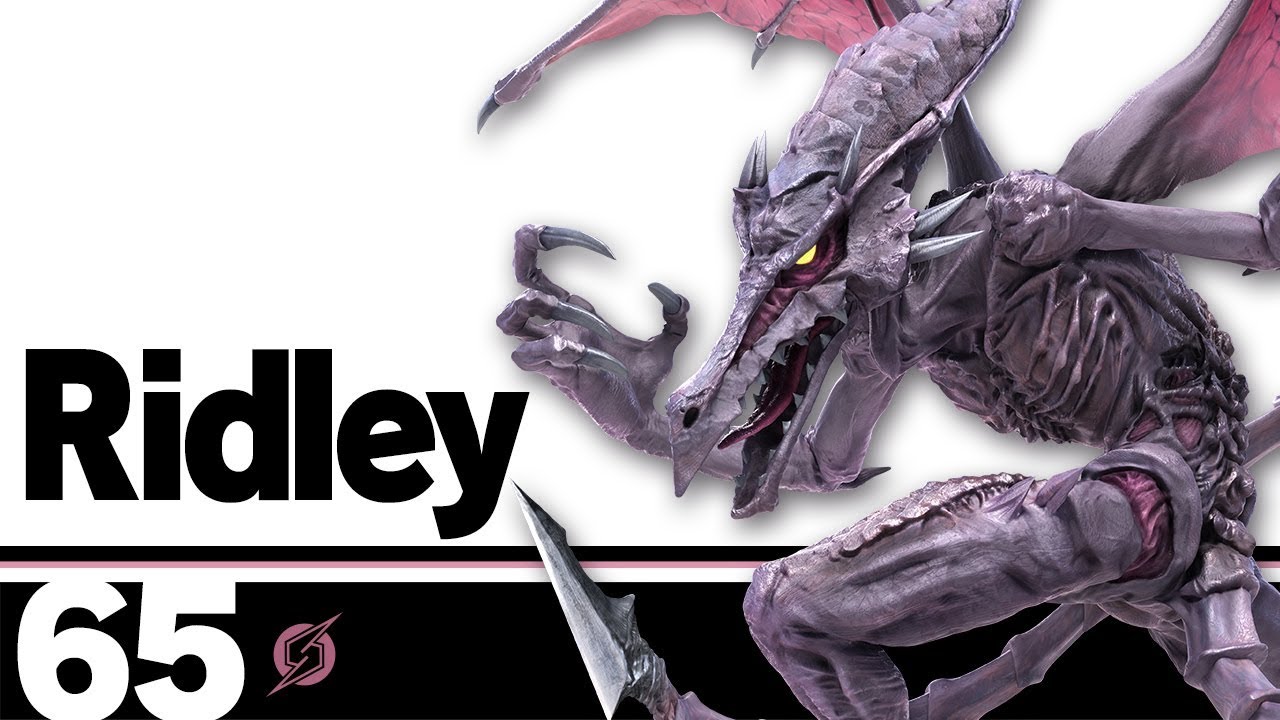
65: Ridley – Super Smash Bros. Ultimate - YouTube

Ridley is a giant space-demon-bird. He is a large character, but not heavy - in real terms, that means it's easy to hit them with attacks and relatively easy to kill them at low health. He is a little bit slow, but he has a decent amount of range on his abilities. He is a high-risk-high-reward character.

The reason I say all of this is to talk about a thing called a "hard read".

A hard read is when you do something based on what you think your opponent is going to do, but hasn't done yet. This comes up in fighting games a lot. Characters in fighting games move much faster than people do in real life, and in fighting games people usually have many fewer choices of action at any given time, versus in real life.

Playing Ridley requires a lot of hard reads, but he has the tools to restrict most characters' choice-space in order to let them make those guesses. As well, played correctly you can minimize the cost of failed reads in order to open up your opponent to different guessing games.

Hard reads exist in fencing, too. The place I would say the concept exists most is in Destreza-esque fighting.

When fencing Destreza, one spends a lot of time with their arm fully-extended. This is good, in that it allows you to gain better opposition and have a strong defensive posture. But it makes life more difficult for attacking. Most attacks from a Destreza-esque posture require an opponent to be at a very specific distance - doubly so in a non-C&T SCA context.

This is because we have fewer joints to un-bend for the action of making an attack. When extending into an attack, we need to make sure that it is going to contact in the "line" of the assault. For a thrust, this is forward along the direction of the blade. For a cut, this depends on the particular sword. Regardless, the elbow and shoulder, working together, can radically reposition the attack at any point.

For Destreza, this is not as much the case. For a thrust in LVD, an opponent stepping slightly in one direction or another can completely mess up an attack. Where an Italian might be able to launch an attack that could hit at anywhere along a few feet of length, a Diestro has maybe a foot of length which can really strike at most, if not even more like a point.

This means that a Diestro has to predict exactly where their opponent will be. This is difficult, since in SCA rapier we generally aren't allowed to physically interpose objects to restrict our opponent's movement. So, we need to guess.

In order to not just lose all the time, this means we need to minimize the cost of a failed guess - that is to say, our defense must be impeccable. In general, when planning an assault in Destreza, I try to make sure that my opponent won't be able to attack me when I attack, regardless of if they are moving backwards or forwards. The right-angle position and extended arm help with this, because they cover so very much space, but they are not perfect by any means.

Bored of writing now, time to be done.

Saturday, August 17, 2019

One Fact of Tall Versus Short

As a long-time tall fencer, tall-ologist and tall-ographer, I have opinions on the tall-versus-short fight. We recently, at my practice, ran an exercise to demonstrate the differences in mechanics between being tall and being short. This inspired me to write down some thoughts I have had for a while.

Behold this beautiful drawing I have made.

Here we have Doroga, with his arm in a sling, versus Remy, with abs and a swole arm.

I have drawn many lines on this drawing. The rough sketch is of two fencers, a tall fencer and a short fencer. The teal line connects their shoulders - it is the line around which all blade engagement is centered. We’ll get back to that line in a bit.

The pair of red lines are the lines on which Remy could attack at full extension and hit a vital area. Any farther outwards and he will not hit Doroga in a vital area.

The pair of orange lines are the same for Doroga.

The orange and red arcs between their respective lines are an arc showing the relative distance gained or lost by raising the blade from the shoulder, with arm and blade fully-extended. The arcs assume that Remy and Doroga have the same arm-plus-blade length, which will be important later.

The dark blue line is the shortest line for Doroga to hit Remy. Similarly, the light blue line is the shortest line for Remy to hit Doroga.

If one is approaching, it is important to cover those lines first, because those will be the lines that your opponent will plan to attack first from out of measure. Anything deeper requires more time, and thus will give you more time to plan a defense.

As such, it is important to cover those lines first. One way to do this is to attack through the line, in such a way that at the point of contact with your opponent’s body, your blade will still be crossing the line of shortest ingress.

The rest of this post assumes that you accept that the above is true. Or at least, true enough.

For Doroga, this means attacking at just about any target below the teal line. For Remy, this means attacking at just about any target above the teal line.

This presents several difficulties for Remy. Doroga has a lot less head than he has body. This is simple human anatomy - the area above the shoulder is smaller than the area below the shoulder.

Doroga is fortunately attacking Remy’s body. This means he has much more valid target area to hit than Remy does, both in terms of width and length. He can afford to be sloppier.

This partly explains a trend that I have seen. People who practice Destreza and other styles which involve standing straight are usually taller humans. Given that most “true” attacks in Destreza involve pushing through your opponent’s sword to attack their body, it makes sense that taller people would have more success with the style, given the above.

I have also noticed that, with some exceptions, most people who practice the Fabris’s fencing style are shorter humans. Given that the Fabris stance leans forward, refusing the lower body, this makes sense.

Wednesday, June 26, 2019

Perfect Practice and Fencing

This post is a comment I made in response to a question someone had on Facebook about "perfect practice" and how to get feedback about if an action is correct. This was my comment, after thinking about it for a day or so.

*****

tl;dr: I engage in minimax, and constantly work to improve the accuracy of my model of positions and of possible moves. "Correctness" of a drilled action can only be defined in those terms. "Perfect practice" is the improvement of one's theory and execution of that theory.

*****

I'm vaguely sorry about this, but I wrote a bit of a novel.

Most of my work in rapier has gone into my ability to classify positions, my opponent's possible options from a given position, and the optimal move for a given position. This lets me figure out if a position is good or bad, aside from the Boolean of "they hit me", "I hit them", or neither.

There are an infinite number of positions that two fencers can be in, with respect to each other, in rapier. Many of the differences between them don't matter. So what I try to do is find the boundary conditions among the set of positions which actually matter.

In terms of fighting - this gets boiled down to half-conscious rules and mnemonics. "If their sword is near the center-line, their tip's position means more than if it's way off-line", that sort of thing.

So, I have developed that list of positions. It is imperfect, which is fine. From that list, I develop the list of actions that a fencer can take, and the list of positions that it can result in, with special focus on positions that I recognize as leading to their victory. And my victory, too, but theirs is more important.

Once I have the list of positions and possible moves, I can observe and decide what the correct action is in a given situation. This context defines whether an action is "right" or "wrong". This is why, when drilling at home, I generally visualize an opponent with a sword, because their position dictates whether my move was "correct".

Every time I lose, it's because I misjudged what position my opponent was in, or misjudged the valid moves from that position. Or I physically failed to do the right thing, which also fits in the category of "misjudged the valid moves" because if I can't get my body to do a thing, it's not a valid move.

This is why my concept of "a tempo" being the minimum amount of time it takes for someone to perceive their opponent and begin to execute a response is so important. Without it, the game can't be formalized in this fashion.

In fencing, as with any real-time game, we are acting with outdated information. We act, and we act, but the fact that the brain takes about 120ms to intake information and another 80ms to output a response to our limbs means that we are always acting with information that is at least a little outdated.

But this allows us to formally isolate moves into atomic units. That allows us to separate out positions. From there, we are able to anticipate our opponent's possible movements from a given position, based on their possible moves.

Keep in mind that our information about what we are doing is always a little more up-to-date than our information about what our opponent is doing. We know our current position, but we only know our opponent's previous position because we haven't perceived their current position yet.

This is further complicated, because even the brain isn't one unit - frequently my body will do correct things without "me" telling it to, and I'll have to suss out whether what I did in a situation was correct or not. And if it wasn't, I have to suss out why I did it, in order to figure out how to communicate to my hind-brain that a different action is better.

I could go even deeper, but I'll spare everyone the essay.

This whole structure is what allows me to dictate if a move was "right" or "wrong". If I don't understand everything here and have full positioning context, then "right" or "wrong" is meaningless. Sure, there are some things that are universally good or bad - rolling one's ankle is just a bad way to take a step. But beyond very a very simple set of things, we need all of this to determine if a movement was "correct".

...I think I should probably copy/paste this into my blog as a post.

Friday, February 1, 2019

Further Destreza Work

Greetings!

At practice yesterday, I decided to work something completely different from what I have been working on. Previously, I had been working on Playing My 45-and-Dagger Game. That has been getting a bit stale because I am messing around too much.

So, this practice I dropped back to my 37 and started trying to work my one-shotting people game. This is important because if someone expects that they could be one-shotted, they will approach more carefully than they otherwise would. This allows for more opportunities in the "ok we're fencing now" part of things, rather than my opponents knowing that my first action will always be defensive.

I didn't do this amazingly well - I think that I strayed into the second intention far too much. I really need to work on my attacks into people's guards, to provoke the correct reactions.

My even-more-offensive-than-usual game also led to an interesting insight about how cuts work, when stepping through. Essentially, you want to maintain middle-to-middle blade contact until you can put your hilt behind their hilt, with respect to their body. This will allow you to "snap" your blade around theirs.

This also has led to a thought that perhaps, out of all of the arbitrary Destrezesque guards that I do, I should be keeping my hilt toward the side of their body that their sword-hand is on, because the way that one executes a cut while passing to that side allows one to defend better than when attempting to go to the other side.

Explicit outline:
-Attack immediately more often. MORE AGGRESSION.
-Snappy winding/unwinding cuts. MORE CUTTING.
-Hilt to the left, tip to the right, against right-handed opponents. MORE... uh. SOMETHING.

Thursday, November 8, 2018

Lupold's REAL ULTIMATE DESTREZA - Index


(The title is a joke-reference to this website, an example of early internet humor, because I'm more likely to follow through with something if I'm less serious about it.)

~OPENING~

I haven't been using this blog very much recently. This is because, any time I try to write something, I get caught up in too many layers of explanation to actually say anything at all.

So, I had an idea. An idea to force me to think things through, but limit me from getting too deep into edge-case scenarios. This idea should also make things accessible to both depth-first learners, who want to have everything Completely Correct At The Get-Go, and breadth-first learners, who want to get a general idea and then Adjust As Things Progress.

In this, I plan to start off with the hyper-idealized form of my study of Destreza. It will present the general geometric concepts, and will be intentionally unreasonable. Then, I plan to cover each individual section with a focus on why the hyper-idealized version of Destreza doesn't work, and what adjustments need made to make it work.

In order to attempt to get myself to proceed on this project, I herein will write an index. This index will serve as an outline for future posts. Hopefully when I inevitably find a thing that I did wrong here, I will edit this, rather than giving up and making a new post.

  1. Opening / Index
    1. Order of Reading
  2. The Section of Primordial Truth
    1. Introduction
    2. On The Four Dimensions of Movement
      1. Disengage versus Cut Over
      2. Pulling Out versus Pushing Over
      3. Opposition versus Attack to Slowness
      4. Yielding Around versus Pommel Strike
  3. The Section of Truth - The True Art
    1. Introduction
    2. On Divisions of Space
    3. On Stepping
    4. On Defensive Bladework
    5. On Offensive Bladework
    6. On Positioning
  4. The Sections of Lies - Inconveniences of Geometry
    1.  Introduction
    2. On Divisions of Space
    3. On Stepping
    4. On Defensive Bladework
    5. On Offensive Bladework
    6. On Positioning
  5. The Sections of Lies - Biology and Eccentric Movements
    1.  Introduction
    2. On Divisions of Space
    3. On Stepping
    4. On Defensive Bladework
    5. On Offensive Bladework
    6. On Positioning
  6. The Sections of Lies - Timing and Feints
    1.  Introduction
    2. On Divisions of Space
    3. On Stepping
    4. On Defensive Bladework
    5. On Offensive Bladework
    6. On Positioning
  7. The Sections of Lies - Distance and Asymmetries
    1.  Introduction
    2. On Divisions of Space
    3. On Stepping
    4. On Defensive Bladework
    5. On Offensive Bladework
    6. On Positioning
  8. The Sections of Lies - Asymmetrical Armaments
    1.  Introduction
    2. On Divisions of Space
    3. On Stepping
    4. On Defensive Bladework
    5. On Offensive Bladework
    6. On Positioning
  9. The Sections of Lies - Asymmetrical Stances
    1.  Introduction
    2. On Divisions of Space
    3. On Stepping
    4. On Defensive Bladework
    5. On Offensive Bladework
    6. On Positioning
  10. Closing
 So, that seems like an index.

~ORDER OF READING~

My intention, for this project, is to have two possible orders of reading.

Both orders of reading will start with the Book of Primordial Truth. This describes a framework for how swords relate to each other, which is to be used throughout the book. After, there are two ways that one can proceed.

DEPTH-FIRST: For those who don't want to learn wrong things over and over again, you can go depth-first. Read chapter 1 of each section, then chapter 2 of each section, and so forth. This will leave some cross-chapter references opaque, and might require multiple times through the book to fully understand what I'm talking about.

BREADTH-FIRST: For those who don't want to get over-focused on individual minutiae at the cost of losing sight of the overall point of the book, you can proceed breadth-first. This is the order of presentation, with each section in the order it is indexed. This will mean that you will learn things that, in a broad sense, are correct. However, there are many details in which the broad understanding of things is not correct, and this ordering will force you to re-evaluate your understanding of things repeatedly.

We'll see how this goes.

Thursday, October 11, 2018

Monday Practice Report, 20181008

It was a relatively small practice, and I got there pretty early.

This practice, because of a person who is very skilled and who I haven't fought very often before, I decided to use my 45-inch rapier and dagger. I fought with them for the whole night, just to make sure I was correctly used to them for when the time came.

We were in the basement, which meant that the lighting was very much worse.

First, I fenced someone who uses shorter sword and dagger, in a sort of Midrealm-ish style. The pizza slice methodology. He was somewhat off I think, or maybe I was Very On, because I took most of those passes. I tried using some of New Spanish Things with my 45-inch rapier, but they didn't work amazingly well. Didn't get me stabbed, but didn't stab the other person either. That said, my feinting game around daggers remains pretty strong.

Second, I fought the person who moved from out of state. They were good fights - he took all but one of the passes, which was interesting and exciting. I tried a number of different methods for dealing with his very specific style. First I tried simply applying opposition in the New Spanish Way that I have been. That worked okay in terms of not letting him stab me before I realized it, but wasn't ideal. I then tried circling through with it. That worked okay-ish, but he spent the entire time moving backwards to get out of measure. Then I tried cutting into his sword as my first action, combined with watching his tempo so I can discern when he is going to attack. That worked better, and I believe was the place where I scored a touch. The last thing I tried was the one that seemed to unsettle him the most - essentially, circling with my blade gaining his on the low line. I circled leftwards at first, and then tried rightwards. I think that worked best of all, and the smooth forward movement forced him into my tempo of action. He's much better-trained than I am, so it didn't allow me to touch him, but it is a valid direction for study.

One thing I did not try, which I probably could have benefited from, is the method of circling and counter-punching that I use against long case fighters, in which I try to get "behind" their sword in order to make an attack.

He did a lot of subtle things that gave him minor competitive advantage, in the way that he presented himself and situated himself. It was interesting to note, even if it was unconscious. I did not want to spend the energy to play the counter-games to those things, but I think I know how to play them. More on that later.

I also fought my cadet. He is doing pretty well in terms of smoothness, but his form needs work. I spent a while afterwards re-teaching him some principles of Destreza, which was fun.

My last set of fights was against Lilias. I think we performed relatively evenly, though she might have had a bit of an advantage. I had a joyous and sociable face on, which meant I wasn't performing at my maximum tournament game. I don't know if that would have changed anything, but it is an internal fact which is worthwhile to note. I kept trying to do Destreza-ish things like I had been trying to teach Rodrigo, and because her technique is very solid, they weren't quite working right. I think they would have worked better with my shorter sword, or playing a more Italian game would have worked better with my longer sword - one of those two. This is not intended as sour grapes or to say "omg I'm better than her!!!!!" or anything like that - I really enjoyed fencing her and am attempting to note things which existed in my brain at the time, as I saw them.

I fenced her after I spent a while teaching Rodrigo, and teaching always makes my fencing suffer for a while afterwards. We also talked for a while afterwards, which was pleasant.

We also had a tournament sort of thing. I was able to get into tourney-brainspace very well and very quickly, which was satisfying to note. I fought a few newer people and used my reach advantage to win those fights. I then fought the second person I fought in the night, using what I had learned earlier.

The passes went weirdly. He took one. Then we had a weird train wreck in which he thought he stabbed my face with his dagger then moved back, and I took the moment to stab him because I thought he had just slapped me with the flat of his dagger rather than anything actually good. He actually gave out an incredulous "what?!" when I said his shot wasn't good. I then asked if he thought his shot was good, and he immediately backpedaled with a "let's re-fight it".

I agreed to this, since that is my usual mode of operation. However, this exchange is good to note. It is a subtle way that someone can be a (perhaps unintentional) jerk in our game. If you "offer to re-fight" before what happened can be conclusively determined, it can undermine possible situations in which you might have lost a pass. Essentially, it allows one to pretend to be giving something away, when you had nothing to give. I'm not saying that the dude necessarily was doing this, or that if he was doing this it was intentional - I'm saying that in a tournament setting, I need to be prepared to push back in circumstances like this.

I didn't mention it explicitly, but the reason it's a perhaps-unintentional jerk move is that there is no way for me to know if, had the situation been reversed, he would have accepted my offer of the same. This makes it Weird, and is frustrating because it could be intentional or it could be unintentional. Even a lack of reciprocity in that case could be unintentional, which is its own form of bad behavior.

In our last fight, he positioned himself under the very bright light, which meant it was hard for me to see him. I moved back and waited for a good 10 seconds. He asked why I was waiting, and I said that I didn't want to fight him under that light. He made a show of being a good sport and moving away from under the light. This, too, is a subtle, perhaps-unintentional move that feels kind of dickish to me. I need to be prepared to not allow my opponent to dictate the terms of our fight, in tournaments.

I'm very used to the people I fence in the East Kingdom, in which there are relatively few people who are both skilled and do the subtle gamesmanship that can happen in competitive sport. Because of this, I keep my eye on those people and prepare to execute counter-gamesmanship when fighting them. The gamesmanship here felt so pervasive that I'm not sure if it was intentional. This makes it a strange game to play, where it's easy for me to come out looking like I'm being a dick.

Basically, I need to flowchart out these interactions ahead of time so that I can have responses ready for when there are things which could be intentional, or could be unintentional, which would give my opponent advantages.

I fenced a very good case fighter in the pools portion of things, and he got a thing on my foot that might have been a good foot-shot. In retrospect, I am not sure it was good. I had said "no" because the angle I saw it coming in on looked like it was a slap to the top of my foot while I was taking a wide step, but he is a nice dude and I should have asked.

I ended up taking third place in the tournament, since it was pools trickling into a top-four single-elimination best-of-three tournament. I got a neat pin out of the deal, which I immediately stuck to the edge of my hood. Yay!

So, Plus-Minus-Plus Exercise:
Thing I Did Well: I mined for more data about how to fence against that particular style.
Area For Improvement: I want to work more on the things I mined from practice, in terms of fencing swords which are either very close or very far from the center line. Maybe consult Thibault???
Other Thing I Did Well: I got into tournament brain-space very quickly and very thoroughly. Good job, me!

Anyhow. It was a good practice, despite not having several people who I wanted to fence at it.