My intention here is for you to use this to create a style for single rapier or rapier and dagger. I honestly like the idea of using rapier and dagger, because daggers remove a lot of messy infighting situations. Also, a lot of sword-and-dagger styles are more universally-applicable. But single rapier is more basic option which is more educational.
This process will create a static "style" or "stance". An opening position and a set of techniques which "hang together" well. As a note - one master might have multiple of what I'm calling a "style" in their book. But there isn't a good word for an individual one of those, so I'm going to call it a style.
Before we create a style, it is useful to consider what we like to do. Most people have specific actions or positions that their brains and bodies enjoy more than others. Furthermore, our subconscious minds can have a lot of opinions about the correct way to do things, and it is useful to try to take them into account. In my experience, this is usually expressed in a "this feels wrong" way, even when you think that the thing is correct.
*****
1. EXERCISE: What feels "natural"? Guard and First Technique.
So, as the first step, grab a sword-like object like a ruler or something, stand up, and figure out three things.
a. How do you like to stand in guard?
b. What is the first action that comes to mind to do, from that guard?
As a note, These are intended as quick, rough ideas rather than end products.
Unless you have a very strong ability to visualize an opponent spatially, I suggest taking a photo or video of yourself in each of those positions or movements, with your camera facing you, at head-level or maybe a bit lower.
From there, we start exploring the philosophy of the style we are going to create.
*****
2. EXERCISE: Consider the above.
a. If the action in 1b was an attack, is it the sort of attack that you would throw while approaching an opponent, or in response to them approaching you?
b. If 1b was not a direct attack, do you imagine it as a response to their action, or as an aggressive movement you perform to take up space?
*****
Based on your answer to this exercise, the style we are creating will be classified as approaching/receiving, and attacker/defender.
So if the action from 1b was an attack where you take their sword with your dagger, the style we are creating would be an "approaching attacker" style.
If the action from 1b was to gain your opponent's blade hard and see how they react, it would be an "approaching defender" style.
If the action from 1b was a retreating lunge where you parry their sword with your dagger, it would be a "receiving attacker" style.
If the action was to let them come to you and then parry them, it would be a "receiving defender" style.
I personally tend to favor "approaching attacker" and "receiving attacker" styles, but other styles definitely have merit. There are also ambiguities about these classifications, but we're just going to use them as a starting point, so don't worry about it too much.
*****
From here, the next few steps fork based on the approaching/receiving attacker/defender classifications. At a high level, we're just taking the stance and the first technique, and trying to figure out things which would compliment that technique.
If you don't want to read through this heinously long section, just consider the following:
1. What do I like to do?
2. What can my opponent do about it?
3. What can I do about the thing my opponent does?
If you want to skip all this bullshit, go down to the "SKIP ALL THIS BULLSHIT" section.
*****
3. EXERCISE: A Second? (and Third?) Technique
A. Approaching
a. Attacker
If you find yourself tending to want to attack, you should consider what positions you expect your opponents to be in. There is no need to be exhaustive. Feel free to imagine some specific fencer as a "default" and proceed from there. If you are not able to visualize your opponent spatially, ask to take a photo of them in guard and use it for this exercise.
If you chose "attacker", then you should consider how you are going to use the attack from 1b to strike your imaginary opponent's openings.
If your imaginary opponent doesn't have an opening which can be reached by that attack, consider how to convince them to open up that spot in particular. This will be the second action of your style. There is a set of questions to help think this through, after this.
If your opponent does have an opening there, consider what the most "obvious" thing for them to do to defend against your attack is. Generally, this is the thing which involves the least movement of the body and blade possible. Consider the following questions from the perspective of where they are when they have defended against your attack.
i. Do they have other openings? If so, are they open enough that you could strike them from your default stance or abort your attack into an attack to that location? Might as well add that in as an attack.
ii. If no clear other openings, is there a place you can push an attack through their sword to maybe hit them? In this case, it is most important to be defended against their sword and disorder them. If you do it enough times, they will need to adapt their guard, and you can return to the first technique.
iii. If no clear openings and their weapon is not available to attack through, are there harassing threats you can make, such as trying for hand or wrist shots?
iv. In a worst-case scenario, look at the next part and crib something from the Approaching Defenders.
Ideally, after those questions, you will have a Second Technique. We'll get back to you, Approaching Attacker!
b. Defender
If you chose "defender", your task is a bit different from the attackers. Your "First Technique" is probably the thing that will happen if your opponent just stands still forever - you bind their blade, or beat it, or go for a disarm, or something like that. Something which gains you space and time, rather than the immediate gratification of stabbing a motherfucker. Regardless - it is usually a proactive action toward their blade. If it is not, then I have failed in my assessment and you should go to the "receiving defender" section immediately.
A receiving defender controls the timing of the bout by the implicit threat they present when approaching. This forces your opponent to do something, anything. Very frequently, this will be an attack.
Get out that photo of yourself. Look at it. Consider where is "open" on you. Is your blade low enough that someone could strike above it to your chest? Is your blade far to one side or the other, making a location for attacking obvious? Keep in mind that there are relatively few "bad" guards. Something that looks like an opening is merely an invitation. It tends to close off other locations, and encourage your opponent to strike at particular openings. This gives you knowledge.
Once you have figured out your most obvious opening, you need to figure out something you can do to defend it. This is generally a large and sword-primary defensive maneuver, like a big ol' windshield-wiper parry or something. It should defend a lot of space and have a large margin of error. You should be able to do it as a reaction without any thought, so it needs to be simple. This is your Second Technique.
After that, go back to looking at that photo. Where is the second most obvious place for an opponent to attack - one which wouldn't be covered by the Second Technique. If you don't see one, move on. If you do, figure out another big ol' obvious parry which feels nice to do, which will cover that opening. That is your Third Technique.
Generally, from that type of big ol' parry or big ol' sword-gain, an attack is difficult. The attack after a big defensive maneuver is improv as much as anything else. Consider what your most obvious attack from the big defensive thing is, and get good at it. Consult the Receiving Defender section for more info.
B. Receiving
As a note - one problem with our game is that in order to win, you have to stab your opponent. This means that in some circumstances, you will need to approach rather than receive. This is especially true when your opponent out-ranges you. It sucks, but it is life.
a. Attacker
As a receiving attacker, your job is generally to convince your opponent to make some kind of a mistake. This is generally done by manipulating time and distance. Moving backwards slowly to make your opponent's attack just a split second slower, or other mean tricks.
Consider what your First Technique is responding to. Is it an attack to your left shoulder? To your belly? to your face? Regardless of what it is, you should look at that photo of yourself in guard. Make sure that the attack you are responding to with the First Technique looks enticing. Stand in front of a mirror, adjusting your guard in small ways to make it look more or less open. The more something is open, the more someone will assume it is bait.
A good complimentary technique for this is a response to something that isn't an attack. The idea here is to increase the amount of cognitive pressure on your opponent, to give them less brain-space to realize that your obvious opening is a trap. Thus, they attack into it, and you can use your First Technique.
Generally, an opponent approaching you goes something like this:
i. They walk up to measure.
ii. They get in guard.
iii. They approach a bit.
iv. They find your blade, increasing their safety a little.
v. They gain your blade in preparation to throw an attack.
vi. They attack.
Between each of those steps is a moment where your opponent's brain is switching gears from one thing to another. And in the moment of your opponent's brain switching gears, they are paying less attention to what you are doing. There are studies to quantify this, but we're just going to leave it at that for the moment.
Choose two of those moments. Make a study of what it looks like when people are finishing up each step in that process. Try to find the rhythm of those actions. Attacking during these moments is all about speed, so try to work on making your attack as fast and efficient as possible, while blocking the most obvious responses. That is your Second Technique.
A good candidate for a Third Technique is to throw an attack from when you are doing these things. So for exmple, you walk into measure and immediately throw an attack without getting into guard.
b. Defender
Receiving Defender - the thing I'm worst at. Also, I'm running out of attention span to write this, so this is gonna be quick.
In general, the receiving defender wants to have the best possible defense. I would say that invitations aren't necessarily in-genre for this style, but two-tempo parry-riposte actions are. The problem with two-tempo parry-riposte actions is that generally, your opponent has an idea of how they are going to exit if their attack fails. Fortunately, most opponents don't think much beyond that.
Look at the photo of your guard. Imagine your opponent attacking, and then you performing the parry which is your First Action. From there, imagine the fastest, most obvious, most direct attack. Then, imagine what your opponent can do about that attack. Consider what you can do to counter this.
In general, an opponent will retreat or otherwise desperately try to parry after their attack fails. You will need to run them down. You will need to practice the timing of people's desperate parries, and ways to get around them or through them. It is a hard time, being a Receiving Defender.
You will also need to integrate one or two more parries into your game, because it is unlikely that a single parry will be enough. Do the same exercise of running through a layer or two of chess-game of what your opponent can do. When doing this, try to keep broad strokes - if you can, try to make sure your actions work against a wide variety of parries and counter-attacks.
In-fighting is a strange and mysterious thing, but it can be useful here. As can dagger-thrusts.
*****
"SKIP ALL THIS BULLSHIT"
So, you have constructed the skeleton of a style. Yay! What do you do with it?
Bring it to practice and make a specific intentional effort, every practice, to use it against at least a few people. Note down how you get stabbed. Fencing has a lot of variance to it, so it takes a lot of examples of a thing to get good data.
Keep in mind - this is a good situation for the use of plus-minus-plus. Because with too many areas for improvement, it is easy to forget about one thing before it is dealt with.
After practice, think about one of the ways you got stabbed multiple times. Or try to think about situations that maybe look like you could have taken advantage of something. Try to figure out which of the following categories it fits in:
1. I can make a small adjustment to my guard or how I perform a technique, and I will be able to stab/not get stabbed.
2. I can make an adjustment, but that adjustment will open a hole in my technique that can be exploited.
3. My style is completely unprepared to deal with this.
If something falls in 1, that's great. You can make that adjustment.
If something falls in category 2, it is likely that you will need to add a technique. Stealing something from the four sections above might be useful. Especially from the sections that do not match your style.
If something falls in category 3, adding a technique might help. However, it is possible that you have run into a central problem in fencing, and you will need to make larger changes beyond the scope of this article. Running into this sort of problem is usually what causes me to read historical masters or try to make up a new style or any one of a thousand questionably-useful things.
One key thing - each practice, only make at most one adjustment to the style you are working on. Again - fencing is a high-variance sport, so you need a lot of data of a narrow set of things in order to draw good conclusions. For examples, I believe that the posts tagged "Focused Work" are where I wrote about that on this blog.
Ideally, try to keep the number of techniques in the style as low as possible. Studies show that when someone is trying to react to a larger set of cues, their reaction time slows down. As well, that point I keep harping on about fencing being a high-variance sport. Doing 100 techniques a single time each gives very little data except "it is possible for this to work". Doing 3 techniques 30 times gives a reasonable distribution of what is or is not working.
*****
It is important to note as well - you don't need to stick rigidly to the techniques. There will always be improvisation after the initial clash of blades. But understanding the first things you do extremely well allows for a better understanding of what comes later, and allows for better improvisation.
GOOD LUCK.
If you want an example of a constructed style, I can provide a link to one. But I'm not gonna do that right now, because I want to go for a run.
Friday, September 9, 2022
LUPOLD'S CREATE-A-STYLE RECIPE SHEET

Tuesday, January 26, 2021
Aerobic exercise, anaerobic exercise, and the relationship between the two.
This is a thing I've been wanting to circle back to for a bit, and I'm putting it in my blog despite the fact that it might be a short post, because I want to include references for future-me.
In general, what I'm trying to express here is the reason that I, personally, need to train cardio. This requires an overview of how aerobic and anaerobic exercise work, as well as a bit of a dive into the biochemistry of energy production.
The tl;dr of how I think about it is that anaerobic muscles create energy debt, while aerobic muscles pay it back. This one-sentence breakdown isn't the full story on the subject - it's not as though all muscles or exercise are completely one or the other. But it is a shorthand of the full version.
(As a note, I definitely can't figure out how superscript works in the new Blogger format, so I'm just going to bold-italicize references unless I decide to go back and fix them in the HTML view thinger.)
One last note before the body of the thing - I am no scientist, so it is likely that I got some parts of this wrong. Please, if you have the expertise to do so, let me know where I'm wrong. I want to gain knowledge, and being told where I'm wrong is a wonderful way to do it.
*****
The traditional wisdom around exercise is that we have two muscle types:
short-twitch fibers, used anaerobically for quick and hard movements, creating energy by consuming lactic acid which is then processed into sugar by the liver.
long-twitch fibers, used aerobically for slower movements, using oxygen to produce energy in a more efficient way using mitochondria to process sugar.
Sure, there is also the smooth muscle of the heart and organs, and the mixed types of muscle fibers. But in general, this is the way that things are outlined, and these muscle fiber types are talked about as though they are completely different systems. In reality, these muscle types operate together both in a physical power-generation level, and on a chemical energy-generation level. This is why for someone like me, for whom the limiting factor in running is not the strength of my legs, it is important to do aerobic exercise in order to increase both aerobic and anaerobic muscular capacity over time.
The energy currency of the body is ATP. This is what our organs, muscles, and brains use to do things. We can produce ATP through two ways - using oxygen or not using oxygen. Using oxygen, we net 38 molecules of ATP per glucose molecule. When not using oxygen, we only net 2 molecules of ATP per glucose. However, the latter reaction is 100x faster. (7) Looking at this in the inverse - this means that committing glucose to aerobic energy production will produce about 1/5 of the energy that would be created by that same glucose anaerobically, in a very short time-frame.
The aerobic method of energy production does produce some waste products, but overall it is very efficient and those waste products are removed from the body. The anaerobic method, however, produces lots of lactic acid, which can be disposed of in two ways.
The first, and most commonly-mentioned in textbooks, is that the liver processes lactic acid back into glucose, consuming ATP to do so. From there, the glucose can be used aerobically by the liver and other tissues of the body.
The second method is removal by other skeletal muscle. (1) Primarily-aerobic muscle is more likely to take in lactic acid from the bloodstream (4). From there, lactic acid forms lactate and is eventually oxidized into pyruvate, and can be taken directly into the early stages of the citric acid cycle, which is the aforementioned means of producing 38 ATP from one glucose - still producing most of the ATP that it would have otherwise produced.
This means that not only does one's ability to clear lactic acid improve as one gains more slow-twitch or aerobic musculature (5), that same lactic acid is used by that musculature to produce more energy.
(As an aside - apparently lactic acid is not actually the thing which causes muscles to burn. It's free hydrogen ions, produced as part of anaerobic effort, which get used to combine with lactic acid to form lactate.)
This is why aerobic exercise is important. Because the more aerobic musculature you have, the more energy-per-second you can produce. While anaerobic exercise improves on-demand power production, aerobic exercise is what increases one's ability to both produce power over a longer period of time, and to recover from the debts incurred to yourself by doing anaerobic effort.
(As another side note - your body is always doing anaerobic effort. The smooth muscle of your heart primarily gains energy anaerobically, which means there will always be at least some small amount of lactic acid being produced. (6))
As an aside - the ability to process lactate is important to mental health too. In the brain, it behaves as a neurotransmitter. When infused into the bloodstream, it causes panic attacks. (8) Given that the blood-brain barrier allows lactate to pass easily (9), it would make sense that muscular capacity to oxidize lactate into pyruvate would be useful for reducing anxiety by reducing lactate build-up.
(Edit: Aww dang, I meant to mention that apparently the body chugs through lactate faster if you are doing some amount of exercise - for rowers, something like 40% speed was best for faster recovery, even better than full rest (3). So, ignoring that I have no idea how this interacts with heat sensitivity, you will recover faster if you walk around or something after you get done doing something super strenuous.)
*****
As a final side-note, doing the research for this post makes me wonder if there is a system in the brain parallel to fast-twitch and slow-twitch muscles. This would be anxiety-driven versus relaxation-driven thought and action.
As someone with ADHD, I often find myself completely unable to motivate myself to do anything without a deadline or some sort of anxiety looming over my head. Given that lactate, glucose, and pyruvate can all cross the blood-brain barrier to some degree, it would make sense that they could influence the type of thinking one does. They are also all able to be consumed as fuel by the brain.
It would make a kind of sense that the brain would get used to using and producing one type of fuel or another. I wonder if this would create metabolic changes in the brain in the same way that working aerobic or anaerobic musculature increases your capacity to do aerobic or anaerobic work.
*****
A BUNCH OF SOURCES:
(yes I realize I'm mixing citation types and no I will not fix it)
(1) Pagliassotti MJ, Donovan CM. Role of cell type in net lactate removal by
skeletal muscle. Am J Physiol. 1990 Apr;258(4 Pt 1):E635-42. doi:
10.1152/ajpendo.1990.258.4.E635. PMID: 2110420.
https://pubmed.ncbi.nlm.nih.gov/2110420/
(2) Lactic acid recovery profiles following exhaustive arm exercise on a canoeing ergometer S.J. Baker PhD and N. King BSc
https://bjsm.bmj.com/content/bjsports/25/3/165.full.pdf
(3) Koutedakis, Y, and N C Sharp. “Lactic acid removal and heart rate frequencies during recovery after strenuous rowing exercise.” British journal of sports medicine vol. 19,4 (1985): 199-202. doi:10.1136/bjsm.19.4.199
https://www.ncbi.nlm.nih.gov/pmc/articles/PMC1478395/
(4) Juel, C, and A P Halestrap. “Lactate transport in skeletal muscle - role and regulation of the monocarboxylate transporter.” The Journal of physiology vol. 517 ( Pt 3),Pt 3 (1999): 633-42. doi:10.1111/j.1469-7793.1999.0633s.x
https://www.ncbi.nlm.nih.gov/pmc/articles/PMC2269375/
(5) MacRae HH, Noakes TD, Dennis SC. Effects of endurance training on
lactate removal by oxidation and gluconeogenesis during exercise.
Pflugers Arch. 1995 Oct;430(6):964-70. doi: 10.1007/BF01837410. PMID:
8594549.
https://pubmed.ncbi.nlm.nih.gov/8594549/
(6) Barron JT, Parrillo JE. Production of lactic acid and energy metabolism
in vascular smooth muscle: effect of dichloroacetate. Am J Physiol. 1995
Feb;268(2 Pt 2):H713-9. doi: 10.1152/ajpheart.1995.268.2.H713. PMID:
7864198.
https://pubmed.ncbi.nlm.nih.gov/7864198/
(7) (stolen reference from Wikipedia) Stojan, George; Christopher-Stine, Lisa (2015-01-01), Hochberg, Marc C.; Silman, Alan J.; Smolen, Josef S.; Weinblatt, Michael E. (eds.), "151 - Metabolic, drug-induced, and other noninflammatory myopathies", Rheumatology (Sixth Edition), Philadelphia: Content Repository Only!, pp. 1255–1263, ISBN 978-0-323-09138-1, retrieved 2020-11-02
(8) Riske, Laurel et al. “Lactate in the brain: an update on its relevance to brain energy, neurons, glia and panic disorder.” Therapeutic advances in psychopharmacology vol. 7,2 (2017): 85-89. doi:10.1177/2045125316675579
https://www.ncbi.nlm.nih.gov/pmc/articles/PMC5315230/
(9) Knudsen GM, Paulson
OB, Hertz MM. Kinetic analysis of the human blood-brain barrier
transport of lactate and its influence by hypercapnia. J Cereb Blood
Flow Metab. 1991 Jul;11(4):581-6. doi: 10.1038/jcbfm.1991.107. PMID:
2050746.
https://pubmed.ncbi.nlm.nih.gov/2050746/
Friday, January 15, 2021
Skill Improvement for ADHD Brains with a TL;DR List
Earlier today, I wrote a comment in response to a post on reddit about how to improve when you have ADHD. As someone who has ADHD and is pretty okay at a number of skills, I thought I would put that comment here too, since that's what a blog is for.
Enjoy!
*****
I have ADHD-PI, and here is a bunch of actionable advice I've used with myself for improving at skills. Since we all have ADHD here and are likely to type much more than we're willing to read, here's a tl;dr:
TL;DR BULLET POINT LIST
- Cultivate relaxed, sincere interest
- Don't over-read
- Don't over-train
- Don't keep playing when in a bad headspace
- Get exercise
I'm not amazing at the game, but I do have other competitive things I'm good at. Generally I try to cultivate a "relaxed, sincere interest" in things I want to get better at. If I try to force my brain to focus on the game, then I end up beating myself up about not doing things correctly. That teaches my brain that playing the game causes suffering, thus making it harder to focus. If I relax and let my brain think about the things I love about the game, that means my brain is more likely to stay engaged.
Honestly, having too much knowledge about the game that you're not ready to apply can be a hindrance to improvement. If you have too many things you're trying to do, you won't improve at any of them. Maybe try to focus on improving one thing at a time, and try reading about the game less. I've also often found that a lot of what people say online is either not applicable to my play-style, or I'm not ready to hear it yet. If I don't have the skill to pull off something that someone says online, the solution isn't to try harder. The solution is to ignore it until it seems more natural to me. I have often found that advice has made no sense to me, but after playing and improving for a few months, it will suddenly make sense and be the easiest thing in the world to execute.
(As an example - I used to not understand why people loved Ridley's nair so much. I would try to use it, but then it would get stuffed by disjoints. So I stopped trying to use it for a while. Eventually my spacing and match-up understanding improved enough that using nair seemed natural. So I, too, started to love the nair.)
The brain is an associative learning device - that is to say, if you are spending a lot of time playing sub-optimally, the brain will learn to continue playing sub-optimally. If you notice yourself on autopilot, go do something else so your brain doesn't train itself harder to play on autopilot.
Brains require actual physical chemicals in order to improve at skills, and they only produce those chemicals at a certain rate. If you try to improve at a skill when your brain doesn't have any more of the chemicals needed for learning, you won't be able to improve. So don't overdo it, and if you're already tired then don't play very much.
Exercise also improves the rate at which the brain produces these brain chemicals, so doing some sort of exercise can help. Half an hour of cardio per day has been shown to improve the ability of ADHD brains to focus. As well, strength training increases the rate at which the brain produces dopamine, which is one of the brain chemicals needed to learn. Especially if you're starting out, you don't have to do much - just a nice walk is good.
*****
Again, I hope that y'all had a good time reading this thing. I hope that at the very least the bullet-point list helps some of you.
Have a good day!
Wednesday, October 28, 2020
Smash Bros, rather than Fencing, and Hard Reads
It has been a long time since I made a blog post! Let's make one today.
Since the pandemic started, I have been doing basically zero fencing. A little bit of stray fencing work here and there, but no consistent practice and nothing really useful for improving my fencing. But what I have been doing is playing Smash Bros Ultimate.
Smash Bros is a series of fighting games unlike any other. It is highly air-focused and mobile, and has mechanisms in place to put penalties on too much defense and too much offense both. There are a ridiculous number of characters. I play one named Ridley.
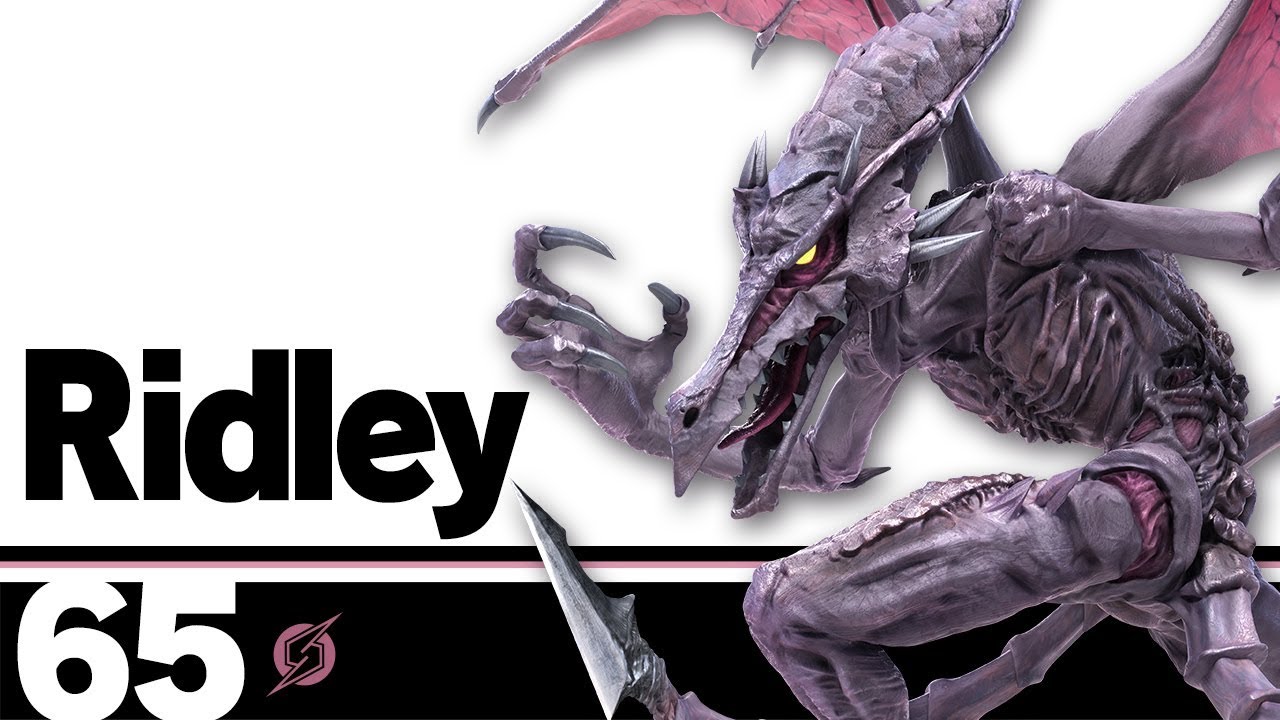
Ridley is a giant space-demon-bird. He is a large character, but not heavy - in real terms, that means it's easy to hit them with attacks and relatively easy to kill them at low health. He is a little bit slow, but he has a decent amount of range on his abilities. He is a high-risk-high-reward character.
The reason I say all of this is to talk about a thing called a "hard read".
A hard read is when you do something based on what you think your opponent is going to do, but hasn't done yet. This comes up in fighting games a lot. Characters in fighting games move much faster than people do in real life, and in fighting games people usually have many fewer choices of action at any given time, versus in real life.
Playing Ridley requires a lot of hard reads, but he has the tools to restrict most characters' choice-space in order to let them make those guesses. As well, played correctly you can minimize the cost of failed reads in order to open up your opponent to different guessing games.
Hard reads exist in fencing, too. The place I would say the concept exists most is in Destreza-esque fighting.
When fencing Destreza, one spends a lot of time with their arm fully-extended. This is good, in that it allows you to gain better opposition and have a strong defensive posture. But it makes life more difficult for attacking. Most attacks from a Destreza-esque posture require an opponent to be at a very specific distance - doubly so in a non-C&T SCA context.
This is because we have fewer joints to un-bend for the action of making an attack. When extending into an attack, we need to make sure that it is going to contact in the "line" of the assault. For a thrust, this is forward along the direction of the blade. For a cut, this depends on the particular sword. Regardless, the elbow and shoulder, working together, can radically reposition the attack at any point.
For Destreza, this is not as much the case. For a thrust in LVD, an opponent stepping slightly in one direction or another can completely mess up an attack. Where an Italian might be able to launch an attack that could hit at anywhere along a few feet of length, a Diestro has maybe a foot of length which can really strike at most, if not even more like a point.
This means that a Diestro has to predict exactly where their opponent will be. This is difficult, since in SCA rapier we generally aren't allowed to physically interpose objects to restrict our opponent's movement. So, we need to guess.
In order to not just lose all the time, this means we need to minimize the cost of a failed guess - that is to say, our defense must be impeccable. In general, when planning an assault in Destreza, I try to make sure that my opponent won't be able to attack me when I attack, regardless of if they are moving backwards or forwards. The right-angle position and extended arm help with this, because they cover so very much space, but they are not perfect by any means.
Bored of writing now, time to be done.
Saturday, August 17, 2019
One Fact of Tall Versus Short
Behold this beautiful drawing I have made.

Wednesday, June 26, 2019
Perfect Practice and Fencing
Friday, February 1, 2019
Further Destreza Work
At practice yesterday, I decided to work something completely different from what I have been working on. Previously, I had been working on Playing My 45-and-Dagger Game. That has been getting a bit stale because I am messing around too much.
So, this practice I dropped back to my 37 and started trying to work my one-shotting people game. This is important because if someone expects that they could be one-shotted, they will approach more carefully than they otherwise would. This allows for more opportunities in the "ok we're fencing now" part of things, rather than my opponents knowing that my first action will always be defensive.
I didn't do this amazingly well - I think that I strayed into the second intention far too much. I really need to work on my attacks into people's guards, to provoke the correct reactions.
My even-more-offensive-than-usual game also led to an interesting insight about how cuts work, when stepping through. Essentially, you want to maintain middle-to-middle blade contact until you can put your hilt behind their hilt, with respect to their body. This will allow you to "snap" your blade around theirs.
This also has led to a thought that perhaps, out of all of the arbitrary Destrezesque guards that I do, I should be keeping my hilt toward the side of their body that their sword-hand is on, because the way that one executes a cut while passing to that side allows one to defend better than when attempting to go to the other side.
Explicit outline:
-Attack immediately more often. MORE AGGRESSION.
-Snappy winding/unwinding cuts. MORE CUTTING.
-Hilt to the left, tip to the right, against right-handed opponents. MORE... uh. SOMETHING.